Why a Well-Tuned Microscope Matters
Behind every slide there is a patient. A few words on quiet work that rarely gets thought about.
At the end of a service visit, we usually invite the lab team over to look through the scope. Same slide they were looking at an hour earlier. The objectives are clean now, the condenser is where it belongs, and the aperture is set for the objective in use. Almost every time, someone says the same word.
"Wow."
That reaction isn't really about us. It's about what was there all along that nobody could see.
The slide is only as good as the scope
Veterinary and lab techs are trained to read slides. They know what a hookworm egg looks like, what a cast looks like, when a cell looks wrong. Very few are ever taught how to get the best image out of the instrument itself. On a recent visit, one tech put it perfectly:
"We were taught what to look for on the slide, but never how to use the microscope the way you showed us to see the best results."
That isn't a failing on anyone's part. It's a gap in how the work is usually taught.
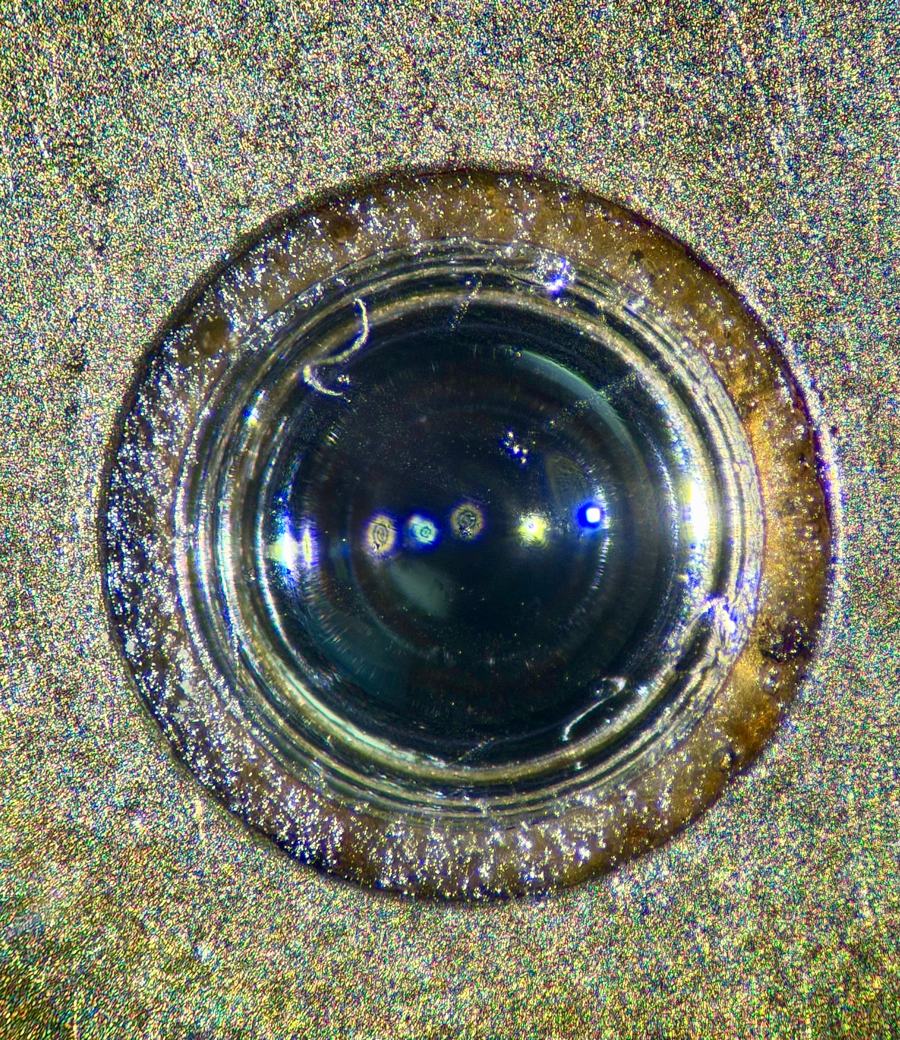
How a dirty or misaligned microscope hides findings
A thin film of dried oil on a 40x objective, a chip in the front lens of a 100x, or a condenser cranked all the way down can each wash out the image. Contrast fades. Fine detail blurs. The condenser height and aperture quietly decide how much of the sample actually reaches the eye.
The faint parasite egg, the blood parasite, the crystals in a urine sediment, the subtle features in a cytology sample: those are exactly the things that disappear first.
When that happens, a finding can be missed. A missed finding can mean a delayed diagnosis, or a patient sent home without the answer that was sitting on the slide.
Why image quality fades without anyone noticing
Microscopes rarely fail all at once. Oil builds up a little at a time. A condenser gets bumped and stays where it lands. A lamp dims slowly. The people using the scope every day adjust to each small change, so the gradual loss goes unnoticed.
That's why the "wow" happens. It's the first time in a long while they've seen what the instrument can actually do. Anyone curious where their own scope stands can start with a two-minute magnifier check of the objectives.
Why microscope maintenance matters for diagnosis
Behind every slide there is a patient. In a vet clinic it's a dog with an upset stomach, a cat that stopped eating, a family waiting on an answer. In a hospital lab, it's a person.
A clean, properly aligned microscope gives the person reading the slide the best possible chance to see what's there.
That's what keeps us doing this. It isn't glamorous, and most people never think about it. But it matters. A well-tuned microscope is one small part of getting the diagnosis right.
Common questions
Can a dirty or misaligned microscope affect diagnosis?
Yes. Oil or film on an objective, a chipped front lens, or a condenser set too low all reduce contrast and fine detail. Faint parasite eggs, blood parasites, urine crystals, and subtle cell features are often the first things lost, which can lead to a missed or delayed finding.
Why does my microscope image look washed out?
The most common causes are a condenser lowered too far, an aperture diaphragm left wide open, or dried oil on the 40x objective. Raising the condenser to just below the slide and closing the aperture to about two thirds open restores contrast in most cases.
How often should a clinic or lab microscope be serviced?
Most clinics and labs benefit from preventive maintenance at least once a year, and more often for scopes in heavy daily use. Between visits, a quick look at the objectives with a magnifier catches oil and damage early.
Why don't techs notice their microscope getting worse?
Image quality usually fades gradually: oil builds up, a condenser gets bumped, a lamp dims. People adjust to each small change, so the loss goes unnoticed until they see a cleaned and aligned scope side by side.